Shut The Box
- 4.7
- Rating
- 100.00K
- Installs
- Free
- Price

 Analysis by App-foxy
I found Shut The Box most enjoyable when I treated it as a short decision-making game rather than a complete board-game replacement. Its rules are easy to understand, but the best turns still make me pause: should I split a dice total across several open numbers, or close one larger number and keep a safer route for later? That small choice gives this board game a surprising amount of tension without making it difficult to learn.
FunCraft Games has kept the presentation focused on the central idea, which suits the format. There is no need to study a long rulebook before playing. I can open it, understand the objective quickly, and start making choices almost immediately. That makes it a natural fit for a short break, a quiet evening, or a casual game with someone who does not usually play mobile board games.
The important qualification is that this is a compact experience. I would recommend it to people who like dice, probability, and light strategy, especially when they want a game that can be picked up and put down easily. I would not choose it for a player expecting a deep campaign, a large collection of modes, or a highly social online board-game platform.
You May Also Like

 Blood Strike: 2.5 Anniversary
Blood Strike’s Loadouts Turn Every Drop Into a Tactical Gamble
A close look at Blood Strike’s custom loadouts: how fast access to signature weapons reshapes its battle royale rhythm, rewards preparation, and narrows the gap between fights.

 Pandora - Music & Podcasts
Pandora’s Music Is Easy to Start, but Harder to Recover
Pandora’s strength is its low-effort path from a seed to a station. Its weak spot is how much confidence it asks you to place in connection, setup, and quiet recovery.

 8 Ball Pool
 Is Built on Rivalries, Rematches, and Routine
A close look at the rivalries, rematches, shared routines, and unanswered safety questions that turn a quick pool match into a persistent mobile community.

 Samsung Music
’s Quiet Strength Is Playing What You Already Own
Its reach comes less from spectacle than from dependable access to a personal library. That simplicity is both the app’s strongest retention engine and its ceiling.

 AccuWeather: Weather Radar
AccuWeather Review: A Quick, Clear Forecast for Everyday Decisions
For everyday plans, the best forecast is the one you can understand quickly. AccuWeather makes rain timing, radar, and local conditions easy to act on, with a few trade-offs.

 Hill Climb Racing
Why Hill Climb Racing Still Turns Crashes Into One More Run
A tiny car, a bumpy hill and one more upgrade: Hill Climb Racing keeps resurfacing because its simple chaos makes every near-miss feel personal.
More From Our News Desk



Why the simple rules create real decisions
The appeal comes from the relationship between luck and planning. The dice decide what totals are available, but I decide how to use those totals on the board. A turn can look harmless when several numbers are still open, then become awkward after one or two choices remove the most useful combinations. That gradual loss of flexibility is where the game earns its tension.
I especially like that the game rewards looking beyond the immediate move. Closing a number that matches the current roll may feel efficient, but it can also leave an uncomfortable set of numbers for the next turn. A better choice may be less obvious: preserve a useful pair, remove a troublesome high value, or keep several ways to respond to future rolls. The game does not need complicated systems to make those decisions meaningful.
My most useful habit was to stop treating every roll as a command. Instead, I first looked at all the combinations that could produce the total, then considered which open numbers would be hardest to remove later. This is a small change in thinking, but it makes the experience feel more strategic. It also gives beginners something concrete to improve rather than relying only on better luck.
Another practical tip is to avoid spending all of your flexible numbers too early. A board with many small values can offer several combinations, while a board dominated by awkward leftovers may leave very few legal choices. I found that preserving options often mattered more than making the most visually satisfying move. That is the kind of lesson a brief store description would not tell you, but it is central to enjoying this particular game.
The game also works well as a mental reset because each decision has a clear scale. I am not managing a large deck, a complicated economy, or a long-term character build. I am simply weighing the current total against the shape of the remaining board. That narrow focus makes the game approachable while still giving experienced players room to refine their play.
A useful game for short, ordinary moments
I can easily imagine playing it while waiting for an appointment, during a commute when I am seated, or after dinner when I want something more engaging than scrolling but less demanding than a large strategy title. A typical session can be approached as a quick challenge rather than a commitment to a long play period. That flexibility is one of its strongest practical advantages.
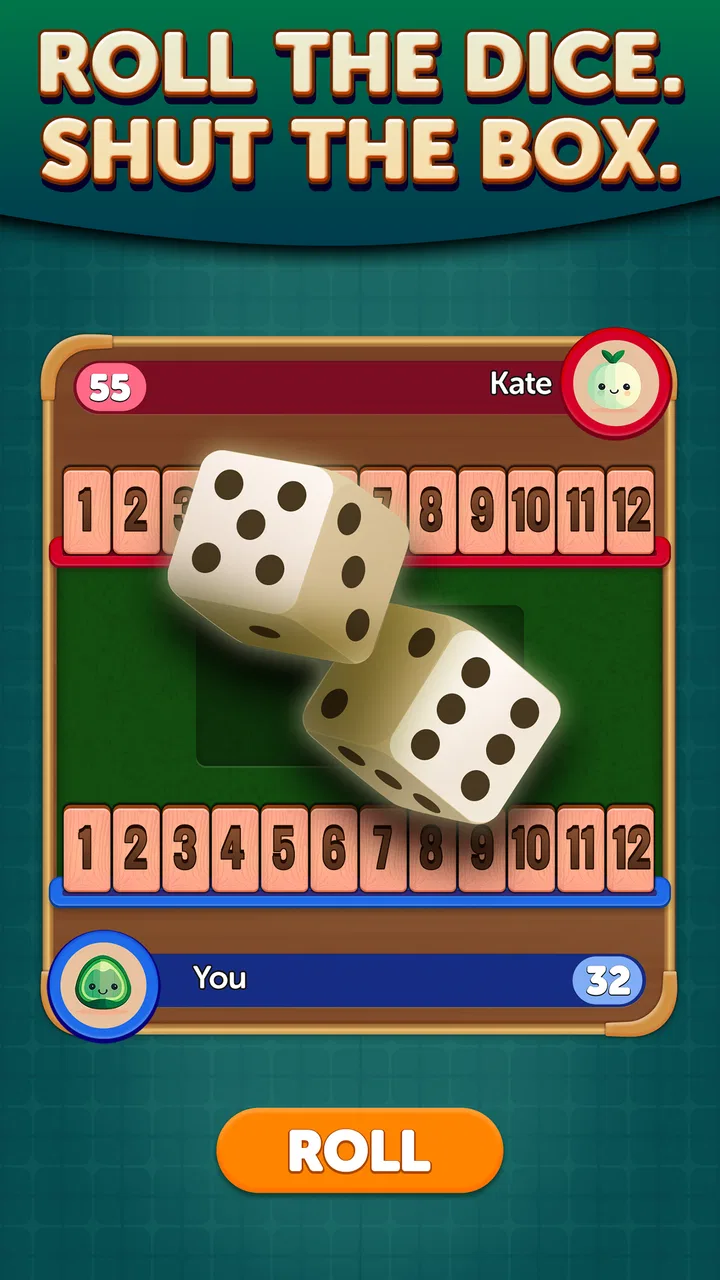
It also suits a relaxed pass-and-play situation. The rules are visible through the board state, so another person can understand what is happening by watching a few turns. If you are introducing the game to a family member who dislikes complicated apps, the learning curve should feel manageable. The Everyone content rating reinforces that broad accessibility, although the real audience is still defined more by interest in dice strategy than by age alone.
For a family setting, I would explain one principle before starting: do not judge a move only by how many numbers it closes immediately. Showing that future flexibility matters makes the first game more interesting and prevents the experience from feeling like pure random rolling. Younger players may enjoy the visible progress, while adults can focus on probability and risk management.
Where it stands beside familiar board-game alternatives
Compared with a traditional physical version, the mobile format is quicker to set up and easier to carry. I do not need a box, dice, a flat table, or someone to keep track of the board. That convenience matters when I want the basic experience without preparing a game night. The trade-off is that a phone cannot reproduce the same tactile pleasure as handling real dice and moving physical pieces.
Compared with a standard dice-rolling game that asks me to chase combinations for points, this one feels more spatial and corrective. I am not merely waiting for a favorable result; I am shaping the board so that future results remain useful. That gives each roll context. On the other hand, players who prefer constant variety may find the focused structure repetitive after several sessions.
It is also less expansive than a full digital board-game collection. Those alternatives may offer several games, richer presentation, multiplayer systems, or longer-term progression. Shut The Box is more appealing when I want one recognizable idea executed without a lot of surrounding material. If your priority is a broad social hub, I would look elsewhere. If your priority is a clean, focused dice puzzle, this narrower approach makes sense.
The developer, FunCraft Games, has positioned the release around that classic dice-strategy identity rather than trying to turn it into an overloaded entertainment package. I appreciate the restraint, but it also means the game has to succeed on the quality of its core loop. For me, it largely does, provided I accept that repetition is part of the design rather than a flaw that will be solved by unlocking a completely different genre of play.
The friction that affects long-term appeal
The biggest limitation is the narrow scope. Once I understand the decision pattern, the challenge comes from improving my choices and accepting different rolls, not from discovering a steady stream of new mechanics. That can be satisfying for a while, especially for players who enjoy mastery, but it may not hold the attention of someone who needs frequent novelty.
The free entry is welcome, but the presence of in-app purchases is worth keeping in mind. Individual items range from forty-nine cents to forty-nine dollars and ninety-nine cents. That is a broad spread, so I would approach optional spending carefully and decide in advance whether I want the basic game only or whether additional purchases genuinely improve my experience. The game is free to download, but “free” does not automatically mean every part of the experience is equally free of spending prompts.
I also think the simple structure makes interface clarity especially important. In a game with only a few meaningful actions, any uncertainty about what can be selected or what a roll allows becomes more noticeable. When I play this kind of title, I want the board state and available choices to be immediately readable. The focused design raises the standard: there is nowhere for confusing presentation to hide behind a large amount of content.
Another trade-off is emotional variety. The game can create suspense when I am trying to preserve a workable board, but it is not designed to deliver the dramatic swings of a competitive card battler or the personal attachment of a role-playing game. Players looking for stories, characters, exploration, or elaborate progression should skip this one. Its satisfaction comes from making a better small decision, not from building a larger virtual world.
In-app purchases also make the game less ideal for handing to a child without supervision, even though the content rating is Everyone. I would still be comfortable introducing the rules to a family, but I would check the device’s purchase controls first. That is a practical step for any free mobile game with optional items, and it prevents an otherwise simple board experience from becoming an unpleasant surprise.
Who will get the most from it
I think the strongest audience is the player who likes compact puzzles with a visible risk-and-reward pattern. If you enjoy rolling dice but want more control than a purely luck-based game provides, this is a good middle ground. You get the uncertainty of the roll, then a meaningful choice about how to respond. That combination makes it approachable for newcomers and quietly rewarding for people who like optimizing decisions.
It is also a good choice for someone who wants a casual game that does not require a large time investment. I would recommend it to a friend who says, “I want something simple, but I do not want to switch my brain off.” The rules are light enough for a relaxed session, while the board encourages planning several moves ahead.
Players who should skip it are those searching for a deep multiplayer ecosystem, a story-driven adventure, or a large library of content. I would also hesitate to recommend it to anyone who becomes bored quickly with repeated dice-based structures. Even when the decisions change, the basic rhythm remains recognizable. That consistency is a strength for focused players and a weakness for variety seekers.
Device compatibility is reasonably broad: the game supports Android devices running version seven or later. That makes it accessible to many older phones and tablets, although the experience will still depend on how comfortable the screen is for reading and selecting the board. The current version is 1.2.25318, so I would keep the app updated through the normal store process when updates are available.
What the audience response suggests
The public response is encouraging. The game holds a 4.8 average from around one thousand seven hundred ratings, with one hundred thirty-nine written reviews, and it has passed fifty thousand installs. Those figures do not replace personal taste, but they fit my impression that the basic concept is landing well with players who want a straightforward dice game.
I would interpret that response with some restraint. A strong average can tell me that the core experience is appealing, but it does not guarantee that the game offers the depth or variety I personally want. Someone who enjoys short strategic rounds may rate it very highly, while someone looking for a full board-game platform may still find it too limited. The audience fit matters more than the headline score.
The release date is February twenty-seventh, two thousand twenty-six, which places the game in a relatively early stage of its life. That makes the focused design easy to understand, but it also means I would judge it primarily on what is enjoyable now rather than on promises about a long future of additions. For a new player, the sensible approach is to try the free version, learn the rhythm, and decide whether the core loop has enough staying power before spending on optional items.
My verdict after playing the core loop
Shut The Box succeeds because it understands the value of a small decision. It does not need a complicated ruleset to make me care about a roll. By asking me to choose between immediate progress and future flexibility, it turns a familiar dice format into a modest but genuine strategy exercise.
My strongest recommendation is for casual board-game fans, families looking for an easy introduction to dice strategy, and mobile players who appreciate games that work in short sessions. I would describe it as a good companion for spare moments rather than a replacement for a full tabletop collection. Its free price makes trying it straightforward, while the optional purchase range means I would keep spending deliberate.
The honest downside is that the same focus that makes it accessible can limit its longevity. There is no need to learn a sprawling system, but there is also less to uncover once the basic pattern becomes familiar. If you enjoy repeating a compact challenge and improving your choices, that will feel like refinement. If you need constant new content, it will feel like repetition.
For me, the final judgement is positive with a clear condition: play it for the decisions, not for endless variety. FunCraft Games has delivered a friendly board game with enough tactical texture to reward attention, while keeping the entry barrier low. It is at its best when you want a quick dice puzzle that gives luck a voice without letting luck make every decision for you.
FAQs for Shut The Box
01What is the main objective of Shut The Box?
The main objective of Shut The Box is to close all the numbered tiles on the board by rolling dice and matching the numbers rolled to available tiles. Players aim to shut all tiles, ideally in as few turns as possible. This simple yet strategic game is perfect for sharpening math skills and quick thinking.
02Is Shut The Box suitable for all age groups?
Yes, Shut The Box is a family-friendly game suitable for all ages. Its simple rules make it accessible to younger players, while the strategic aspect keeps it engaging for adults. It serves as both an educational tool and an entertaining pastime, making it ideal for family game nights.
03Does Shut The Box require an internet connection to play?
No, Shut The Box can be played offline, making it a great travel companion or a perfect way to pass the time without worrying about internet connectivity. This offline capability ensures that players can enjoy the game anywhere, anytime, without interruptions.
04Are there any in-app purchases or ads in Shut The Box?
Shut The Box may include in-app purchases for enhanced features or ad-free experiences. While ads can be present in the free version, they are generally non-intrusive. Players can choose to make purchases to enhance their gaming experience, though the core game is fully playable without spending money.
05Can Shut The Box be played with friends?
Yes, Shut The Box supports both single-player and multiplayer modes. Players can enjoy friendly competition with friends or family by taking turns or connecting through online features. This flexibility in gameplay allows for both solo practice and engaging multiplayer sessions.
Pros
- Simple and intuitive gameplay.
- Enhances mathematical skills.
- Quick rounds for short breaks.
- Visually appealing design.
- Suitable for all age groups.
Cons
- Limited replayability over time.
- Requires basic math skills.
- No multiplayer mode available.
- Ads can be intrusive at times.
- Lacks diverse customization options.

Shut The Box
Gallery